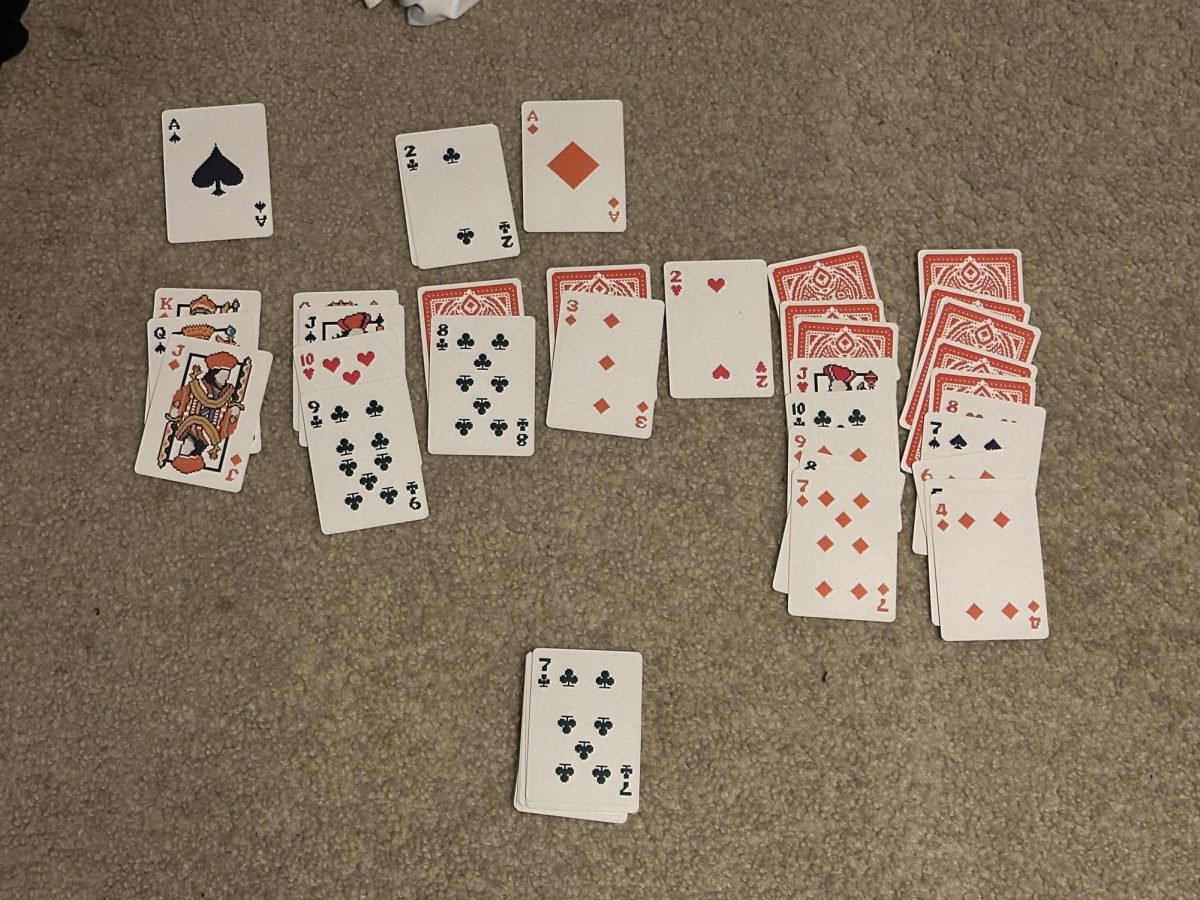
Solitaire is a one-player card game genre that originated in Northern Europe during the 18th century. It has since spread throughout the world, with many unique games being created. Most use a standard 52-card deck and only require a single player. Spider, Freecell, Klondike, TriPeaks and Pyramid are just five popular examples of the countless ways one can play a game of Solitaire.

Of course, I must begin with the most iconic example of a Solitaire game called Patience. This game is one of the few examples of what I would say has perfect game design. This version has seven columns, each holding between one and seven cards at the start of the game. The basic ruleset of needing to stack red on black and vice versa down from King to two in the main game area called The Tableau is exquisite. The way to win is simple: move each card into suited piles of ascending order starting from Ace into the secondary game area called The Foundations. The seemingly infinite amount of variations of the game’s start and the perfect combination of luck, skill and knowledge creates an endlessly entertaining gameplay loop for any time of day.
Another form of Solitaire I enjoy playing is one that I like to call “Tomb Raider.” No, it does not include Lara Croft in it at all. It is played with 53 cards rather than the standard 52 as a Joker is shuffled in for use as the method of winning the game. The goal of the game is to uncover and collect the four Ace cards and then use the Joker card to escape. It is much simpler than any other Solitaire game I have played. I will usually get one or two games in before I get bored, but this version is a good way to keep my hands busy for 10 to 20 minutes.

One other Solitaire game I like to play could be called by many names. Cops & Robbers, Defend Area 51, Space Invaders, or really anything that tips off players that there are two teams in this game. Players must split up the deck between the red and black cards and use their math and critical thinking skills to play. They win by using the black cards to defeat or control all the red cards. This game is like Tomb Raider for me because it is a simple way to keep my hands busy for around 10 minutes, but only because there are multiple setups that allow players to beat it easily, such as Ace/2/3/5/7/8. This setup allows the player to either replace their cards with red cards of the same value or use two cards’ values to add up to the red cards’ values to beat the game quite easily.

Aside from the plethora of games in the genre, the sheer accessibility of Solitaire is quite possibly the greatest thing about it. A deck of cards is not a hard thing to find. Even if someone does not have one, they can go online to find endless apps and websites that allow them to play Solitaire whenever and wherever they want. Google even has their own version of Solitaire people can play if they just simply type in the word “solitaire” into the search bar.
All in all, Solitaire is a great genre filled with many games to keep players entertained for as long as they need. It gets a perfect 52/52 cards in a standard deck and its prize is my growing obsession with collecting decks of cards.
